How I Knew This Tattoo Was Right for Me Even Though I Couldn’t Fully Explain It
When people talk about knowing a tattoo is right for them, the explanation is usually presented as something clean and convincing, as if certainty arrives fully formed and ready to be articulated the moment the design is chosen. The reality, at least in my experience, has been much less tidy, because the tattoo I felt…
When people talk about knowing a tattoo is right for them, the explanation is usually presented as something clean and convincing, as if certainty arrives fully formed and ready to be articulated the moment the design is chosen.
The reality, at least in my experience, has been much less tidy, because the tattoo I felt most sure about was also the one I struggled to explain without sounding vague or incomplete.
At the time, that inability to fully justify the decision felt like a flaw in my reasoning, something I assumed I needed to resolve before committing to something permanent.
Looking back now, I realize that the lack of a clear explanation was not a warning sign, but part of the reason the tattoo worked, because it was chosen based on how it felt to live with the idea rather than how well it could be defended in words.
The Tattoo Itself and How It Happened
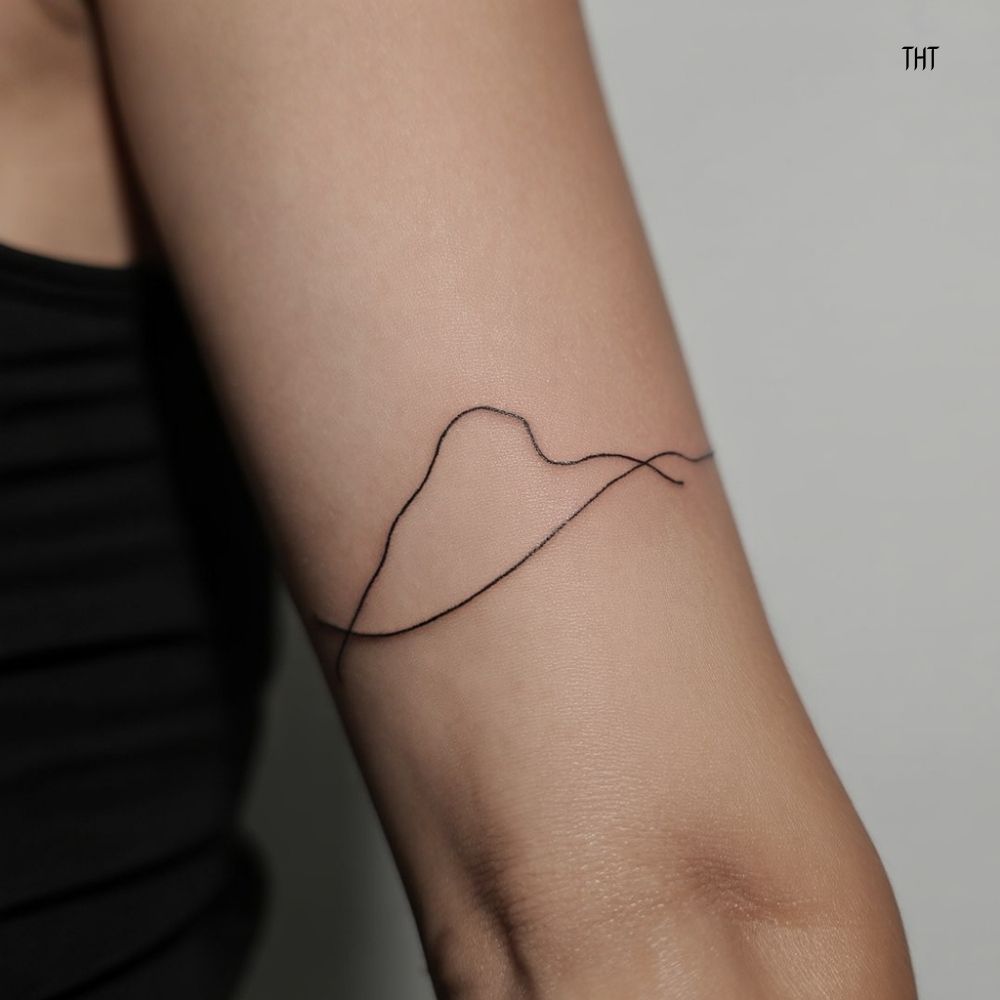
The tattoo is small and deliberately understated, placed along the inside of my upper arm where it is visible to me but rarely to anyone else unless I choose to show it.
It is a single continuous line design, simple enough that it almost disappears at a glance, forming a loose abstract shape rather than a recognizable symbol, which was intentional even though I could not fully explain why at the time.
The day I got it was unremarkable in the way many important moments are, without ceremony or heightened emotion, which stood out to me even then. I remember sitting in the studio feeling calm rather than excited, noticing how quiet my thoughts were compared to previous tattoo decisions where I had rehearsed justifications in my head.
There was no internal debate happening in the chair, no last-minute bargaining or mental list-making, only a steady sense that this was something I had already decided long before I booked the appointment.
Why I Thought I Needed a Better Explanation
I have always been someone who prefers decisions that can be explained clearly, especially decisions that involve permanence, because explanation feels like proof of responsibility.
When friends asked what the tattoo meant, I found myself giving partial answers that felt unsatisfying, both to them and to me, because I could not reduce the choice to a single narrative or emotional milestone.
At the time, I worried that this meant I had skipped an important step, as if not being able to articulate the meaning suggested that I had chosen aesthetics over intention.
Online tattoo culture reinforces this anxiety by placing so much emphasis on symbolism and backstory, subtly suggesting that every tattoo should arrive with a well-formed explanation attached.
The Difference Between Justification and Recognition
What I eventually realized is that justification and recognition are not the same thing, even though they often get treated as interchangeable. Justification is about proving a decision makes sense, while recognition is about noticing when something aligns without needing persuasion.
With this tattoo, recognition came first, and justification never fully followed, which initially felt backward. I did not have a story that made the choice sound profound, but I did have a strong sense that I would not grow away from it. It turned out to be a more reliable indicator than symbolism ever could have been.
How Living With It Confirmed the Decision
Living with the tattoo has been the clearest confirmation that my instinct was right, because it settled into my life without friction almost immediately.
There was no adjustment period where I questioned placement, no lingering sense that I needed to get used to seeing it, and no urge to explain it to myself once the novelty wore off.
It became familiar faster than any of my other tattoos, not because it mattered less, but because it fit more naturally into how I move through the world.
Over time, I noticed that I thought about it less often, which might sound like indifference, but felt more like ease, as if it had found its place without needing ongoing attention.
Why Over-Explanation Can Be a Red Flag
In hindsight, I see that some of my previous tattoo decisions were accompanied by very polished explanations that I repeated often, both to myself and to others, as if saying them out loud helped solidify the choice.
Those explanations tended to age poorly, not because they were untrue, but because they were too rigid to adapt as my life changed.
With this tattoo, the absence of a fixed explanation meant there was nothing to outgrow, no narrative to maintain, and no pressure to keep feeling the same way about it forever. The meaning was allowed to stay loose, which turned out to be one of its strengths rather than a weakness.
The Role of Emotional Quiet in Decision-Making
One of the most useful insights this experience gave me was realizing how much emotional quiet matters when making permanent decisions. The tattoo did not arrive during a moment of urgency or upheaval, and I was not trying to capture or resolve a feeling that was overwhelming at the time.
Instead, the decision felt grounded and steady, even though I could not articulate why, which made it easier to live with long-term. That calmness has stayed with the tattoo, shaping how I relate to it now, long after the moment of getting it has passed.
I expected that certainty would feel loud, obvious, and easy to explain, because that is how confidence is usually portrayed, especially online. The reality was that the certainty I felt with this tattoo was quiet, almost boring, and difficult to package into a neat explanation.
What I learned is that not all certainty announces itself dramatically, and some of the most reliable decisions are the ones that do not demand reassurance. The tattoo did not need to prove itself over time, because it never asked for that kind of validation in the first place.
Who This Kind of Tattoo Decision Is For
This approach works well for people who are comfortable trusting recognition over justification, and who do not need their tattoos to carry a fixed narrative or symbolic explanation.
It suits those who value how something feels to live with rather than how well it can be explained, especially if they prefer tattoos that integrate quietly into their sense of self.
If you need your tattoo decisions to feel fully articulated, symbolically clear, or emotionally definitive from the start, relying on instinct without explanation may feel unsettling.
This approach may not suit anyone who finds comfort in having a story ready to justify permanence, or who expects certainty to feel dramatic rather than calm.
Conclusion
This tattoo taught me that knowing something is right does not always come with the language to support it, and that the absence of explanation does not necessarily signal uncertainty.
In my case, it signaled alignment, the kind that does not need defending because it fits naturally into the life it becomes part of.
Looking back, I trust that quiet knowing far more than I trust the explanations I once felt compelled to perfect, because it has proven to be more durable, more flexible, and much easier to live with over time.