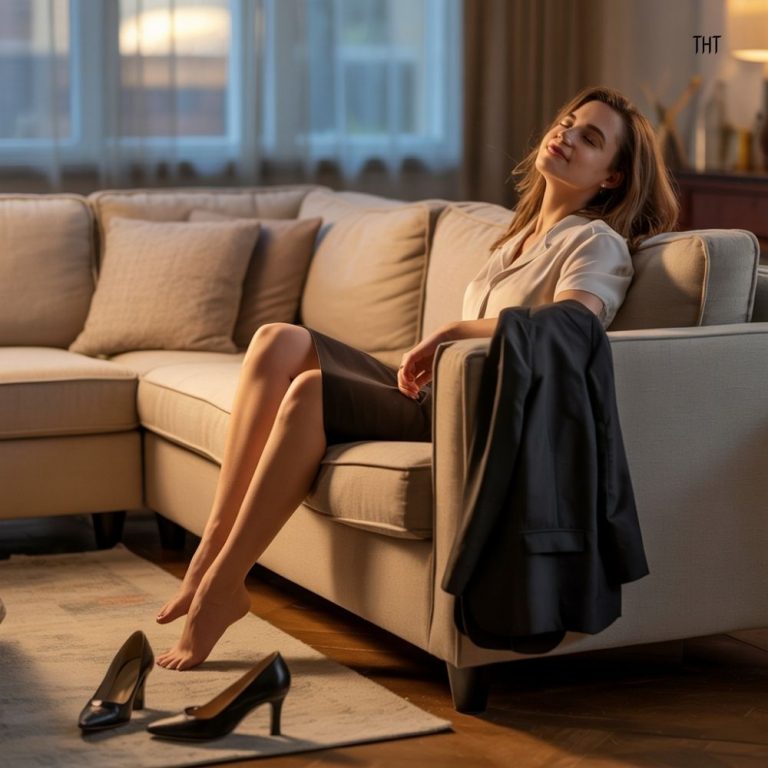
The Difference Between Seeing My Body and Living in It
For a long time, I thought being aware of my body meant paying attention to it, checking how it looked, how it moved, and how it might be perceived in a given moment, but I eventually realized that awareness and presence are not the same thing. Seeing my body kept me slightly outside of it,…
For a long time, I thought being aware of my body meant paying attention to it, checking how it looked, how it moved, and how it might be perceived in a given moment, but I eventually realized that awareness and presence are not the same thing.
Seeing my body kept me slightly outside of it, as if I were monitoring something that needed evaluation, while living in my body required a different kind of attention altogether, one that did not ask for commentary or correction.
The difference between those two states became clearer over time, not through a single realization, but through a series of small moments where I noticed how differently I moved through the same day depending on where my attention was resting.
What changed was not my body, but my relationship to it, and that shift has quietly altered how I understand comfort, confidence, and self-trust.
What It Means to See My Body
Seeing my body is a visual experience first, even when it pretends to be something else. It is the habit of checking posture, noticing angles, adjusting clothing, and registering how I might appear from the outside, often without realizing I am doing it.
This kind of awareness feels active, almost productive, because it creates the illusion of engagement, even though it keeps me slightly removed from physical experience.
When I am in this mode, my body feels like something I am managing rather than inhabiting, and that management requires energy.
I am aware of how I am sitting, how I am standing, how I am moving through space, not because something is wrong, but because attention has drifted outward, toward observation rather than sensation.

What It Feels Like to Live in My Body
Living in my body feels quieter, but not emptier, because it is grounded in sensation rather than appearance. In this state, I am more aware of weight, breath, temperature, and comfort, and less aware of how any of those things might look from the outside.
Movement becomes less deliberate and more intuitive, not because I am careless, but because I am no longer narrating it.
This kind of presence often shows up when I am rested, unhurried, or emotionally settled, and it tends to disappear when I am overstimulated or tired. When I am living in my body, I do not think about it very much, which is how I know I am actually there, rather than hovering just above it.
How Energy Levels Decide Which One I Default To
I have noticed that my default state shifts depending on how much internal energy I have available, because presence requires capacity in a way observation does not.
When I am tired, stressed, or mentally overloaded, I am more likely to see my body than live in it, because observation feels safer and more controlled.
Living in my body requires me to trust sensation, and trust is harder to access when resources are low. In those moments, stepping outside of physical experience becomes a way of managing uncertainty, even though it creates distance rather than relief.
The Role of Habit and Social Conditioning
Part of why seeing my body became so automatic is because it is socially reinforced, especially in environments where bodies are routinely evaluated, commented on, or compared. Over time, observation becomes a habit that feels neutral, even though it subtly pulls attention away from internal experience.
Living in my body, on the other hand, is rarely rewarded or acknowledged, because it is not visible. There is no external feedback loop for presence, which makes it easier to neglect, especially when productivity, presentation, and responsiveness are prioritized over comfort and sensation.
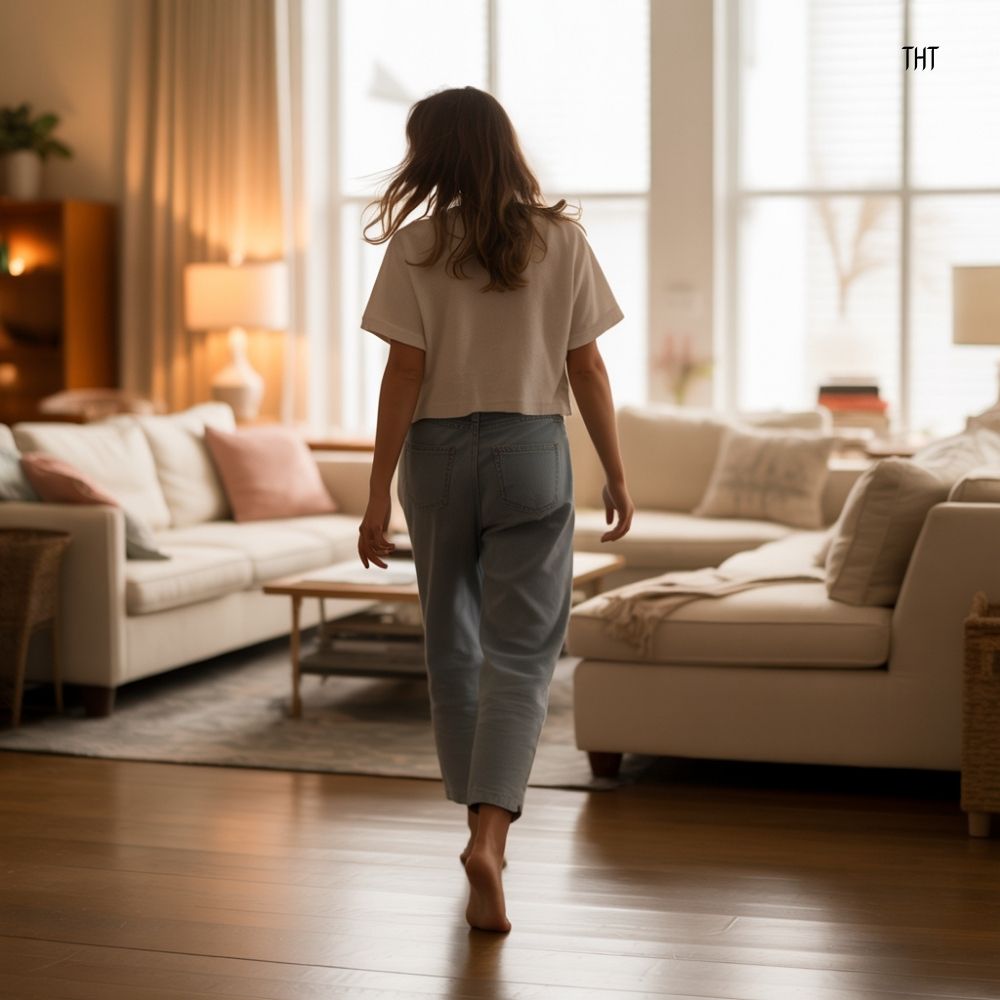
How This Difference Shows Up in Daily Life
The difference between seeing and living in my body shows up most clearly in ordinary moments, not dramatic ones. It appears in how I sit through a long meeting, how I walk through a familiar space, and how I respond to physical discomfort before it becomes distracting.
When I am seeing my body, I tend to ignore early signals of fatigue or tension, because I am focused on maintaining an external standard. When I am living in my body, I respond sooner, adjusting position, pace, or expectation without turning it into a problem to solve.
Why Living in My Body Feels Like Trust
Living in my body feels like trust because it assumes that sensation is reliable information, rather than something that needs to be overridden or corrected. It allows me to respond to physical needs without justification.
This trust does not make me less aware or less intentional, but it does make my attention more internal, which changes how I experience space, time, and interaction.
Decisions feel less forced, movements feel less performative, and my body feels like a place I am occupying rather than an object I am adjusting.
Seeing My Body as a Form of Distance
Seeing my body creates distance, even when it is subtle, because it positions me as an observer rather than a participant. That distance can be useful in certain contexts, such as performance or presentation, but it becomes exhausting when it turns into a default state.
The more time I spend seeing my body, the more effort it takes to return to sensation, because observation reinforces itself. Living in my body requires me to release some of that vigilance, which can feel uncomfortable at first, especially if I am used to control masquerading as awareness.
How This Shift Changed My Relationship With Comfort
Once I began noticing the difference between these two states, my definition of comfort changed. Comfort stopped being something I earned after meeting external expectations and started being something I could access through presence.
Living in my body made comfort feel immediate and negotiable, rather than conditional, which reduced the need to push through physical signals in the name of appearance or performance.
That change has made my relationship with my body feel less transactional and more cooperative.
Expectation vs Reality
I once expected that being more aware of my body would make me feel more connected to it, but the reality was that awareness without presence often created separation instead.
The kind of attention that leads to living in the body is not analytical or corrective, but receptive, and that distinction took time to recognize.
The reality is that presence feels less impressive than observation, but far more stabilizing, especially over long stretches of ordinary life.
Conclusion
The difference between seeing my body and living in it has taught me that presence is not something I achieve through effort, but something I allow by redirecting attention inward.
Seeing my body keeps me informed, but living in it keeps me steady, and that steadiness has become more valuable to me than any external confirmation.
Learning to live in my body has not changed how it looks, but it has changed how it feels to exist inside it, and that change has quietly influenced how I move through the rest of my life, one ordinary moment at a time.