
How I Spend the First Ten Minutes After Waking Up
The first ten minutes after I wake up are not peaceful, inspiring, or particularly impressive, which is probably why they matter to me as much as they do. They happen before I decide who I am for the day, before I remember what I need to be good at, and before my attention is fully…
The first ten minutes after I wake up are not peaceful, inspiring, or particularly impressive, which is probably why they matter to me as much as they do.
They happen before I decide who I am for the day, before I remember what I need to be good at, and before my attention is fully claimed by anything external. It makes them the only part of my routine that hasn’t been optimized into meaninglessness.
I didn’t always treat those minutes with care, mostly because I didn’t realize they were there. For a long time, I gave them away automatically, reaching for my phone, replaying unfinished conversations, or mentally skipping ahead to the version of the day where I was already behind.
Now, I protect them, not rigidly or perfectly, but consistently enough that they’ve become a kind of anchor, less about discipline and more about orientation.
The Exact Moment I Wake Up
When I wake up, it’s usually because my body has decided it’s done sleeping, not because I feel rested or motivated. My eyes open first, and my thoughts follow slowly, still disorganized and slightly out of focus. It is the only time they behave that way all day.
I stay still for a moment, noticing the weight of the blanket, the temperature of the room, and the strange neutrality of being awake before memory fully returns. I don’t check how I slept or how I feel yet, because once I start narrating the experience, it becomes harder to stay inside it.
This moment is fragile, and I know from experience that if I rush through it, it doesn’t come back.

What I Used to Do Instead
Before this routine existed, my mornings started abruptly. I would wake up and immediately reach for my phone, not because I needed information, but because it gave my mind something to hold onto while my body caught up.
Those mornings felt efficient on paper, but scattered in reality. I’d be technically awake but already reactive, responding to messages before I’d registered where I was or how I felt. By the time I stood up, my attention had already left my body.
At the time, I told myself this was normal, even necessary, because mornings were for momentum, not presence. It took a long time to realize how much tension that created before the day even started.
Why I Keep My Phone Out of Reach
Now, my phone stays across the room, not because I think technology is bad, but because I know how quickly it reorganizes my priorities. Even a neutral notification shifts my attention outward, and once that happens, it’s difficult to come back without effort.
Those first ten minutes are the only time my attention isn’t already divided, and I’ve learned that division feels heavier before breakfast than it does later in the day. Keeping my phone away isn’t about discipline; it’s about protecting a state that exists naturally but briefly.
I don’t negotiate with myself about it anymore. I just don’t reach.
How Meditation Entered the Picture Quietly
Meditation didn’t enter my mornings as a goal or a self-improvement project. It showed up because I didn’t know what else to do with that window once I stopped filling it with noise.
At first, I just sat there, unsure of what the stillness was supposed to become. Eventually, that sitting turned into something closer to meditation, though it doesn’t resemble the structured versions I’d tried and abandoned in the past.
I sit up in bed or on the floor beside it, wherever feels easiest, close my eyes, and let my body settle where it wants to. I don’t set a timer, but I know it lasts about ten minutes because my breathing changes and my thoughts lose their sharp edges.
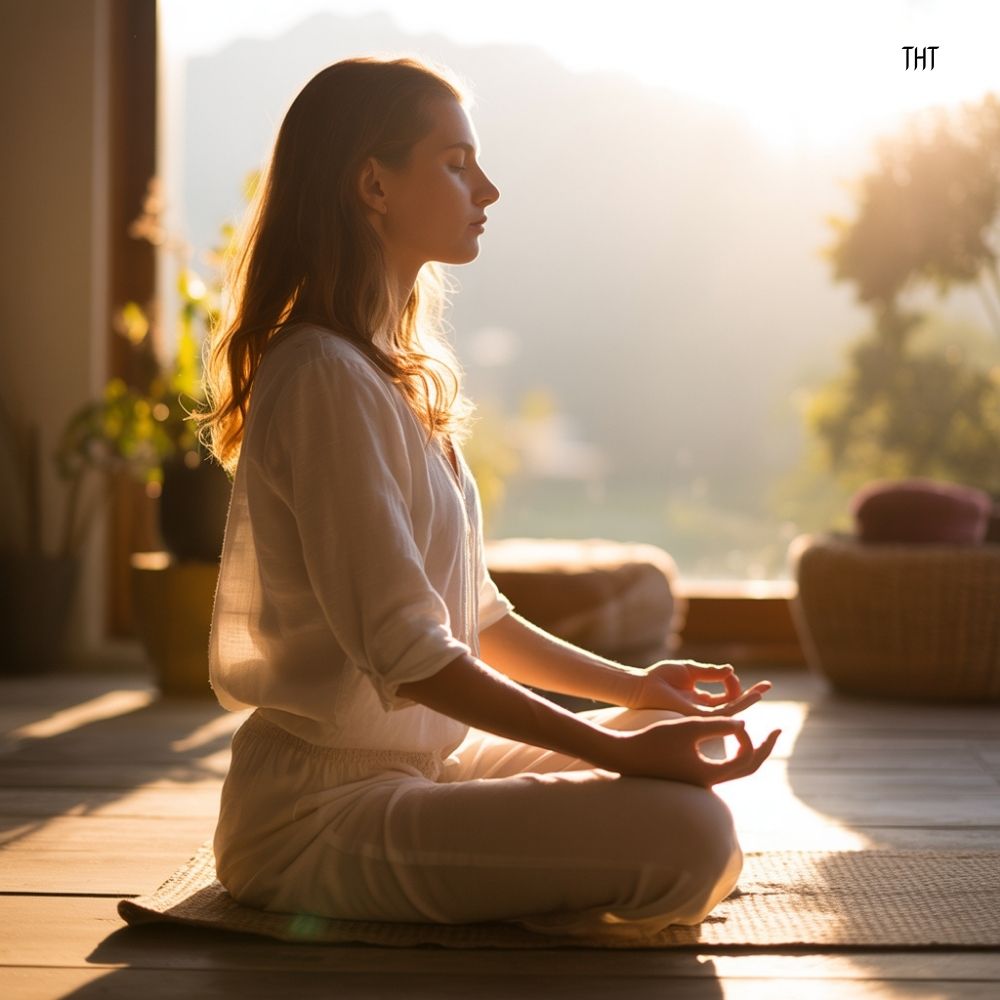
What Meditation Actually Feels Like for Me
Meditation, for me, feels unremarkable in the best possible way. My mind is active, but not demanding, moving through fragments of thought without insisting on resolution.
I pay attention to sensation instead of ideas, the rise and fall of my breath, the weight of my body against the floor, the faint sounds of the building waking up around me. There’s no achievement in it, no clear endpoint, just a steady presence that feels available rather than earned.
What surprises me most is how familiar this state feels, like something I’ve always known how to access but forgot how to enter.
The Difference Between This and Meditating Later
I’ve tried meditating later in the day, and it never works the same way. By then, my body is already holding tension from conversations, decisions, and expectations, and stillness feels like effort instead of access.
In the morning, stillness is already present. I’m not trying to get back to it; I’m just choosing not to leave too quickly.
That difference is subtle but important, because it’s the reason this practice feels supportive rather than performative.
The Days It Doesn’t Work
There are mornings when this routine falls apart. I oversleep, wake up anxious, or convince myself I don’t have time, and on those days, the absence is noticeable almost immediately.
My thoughts feel louder, my body feels slightly ahead of itself, and I’m more reactive to small interruptions. Nothing catastrophic happens, but the day feels sharper, less buffered.
What keeps me returning to the practice isn’t guilt, but contrast. I remember how different it feels when I begin the day from presence instead of urgency.
What Changed Slowly Over Time
This routine didn’t transform my mornings overnight. What changed instead was my relationship to the rest of the day.
I became better at noticing when I was leaving my body, when my shoulders were creeping up or my breath had gone shallow. I didn’t prevent stress, but I recognized it sooner, which changed how long it lingered.
The meditation didn’t make me calmer. It made me more legible to myself.
Later in the day, I’m more aware of when I need to pause, even briefly, because I’ve already experienced what settling feels like. That reference point matters more than I expected, because it reminds me that tension isn’t the default state, even when it feels familiar.
Sometimes that awareness leads to a second pause. Sometimes it doesn’t. Either way, the day feels more navigable.
How My Relationship With Mornings Changed
Mornings used to feel like something I needed to get through in order to reach the part of the day where I was competent. Now they feel like a threshold I’m allowed to cross slowly.
That change didn’t make me more disciplined. It made me more present.
Conclusion
The first ten minutes after waking up don’t define my day, but they introduce me to it, and that introduction matters more than I used to think.
Meditation, in this small, unstructured form, isn’t about becoming calmer or better, but about staying close to myself long enough to notice how I’m arriving.
By spending those minutes listening instead of reaching, I begin the day from a place that already exists, before urgency, before identity, before expectation.
That quiet beginning continues to shape everything that follows, even when the rest of the day does its best to forget it.