How It Feels When Someone Misreads the Meaning of Your Tattoo
I didn’t realize how much meaning I carried privately around my tattoos until the first time someone got one completely wrong, not in a malicious way or even an invasive one, but casually, with the kind of confidence that corrects feel heavier than silence. It happened in the middle of an otherwise unremarkable conversation, and…
I didn’t realize how much meaning I carried privately around my tattoos until the first time someone got one completely wrong, not in a malicious way or even an invasive one, but casually, with the kind of confidence that corrects feel heavier than silence.
It happened in the middle of an otherwise unremarkable conversation, and I remember the exact moment my attention shifted away from what we were talking about and toward the small, internal decision I suddenly had to make.
Do I explain, correct, deflect, or let the misunderstanding stand. I chose the last option, and the feeling that followed stayed with me far longer than the interaction itself.
The Tattoo They Were Talking About
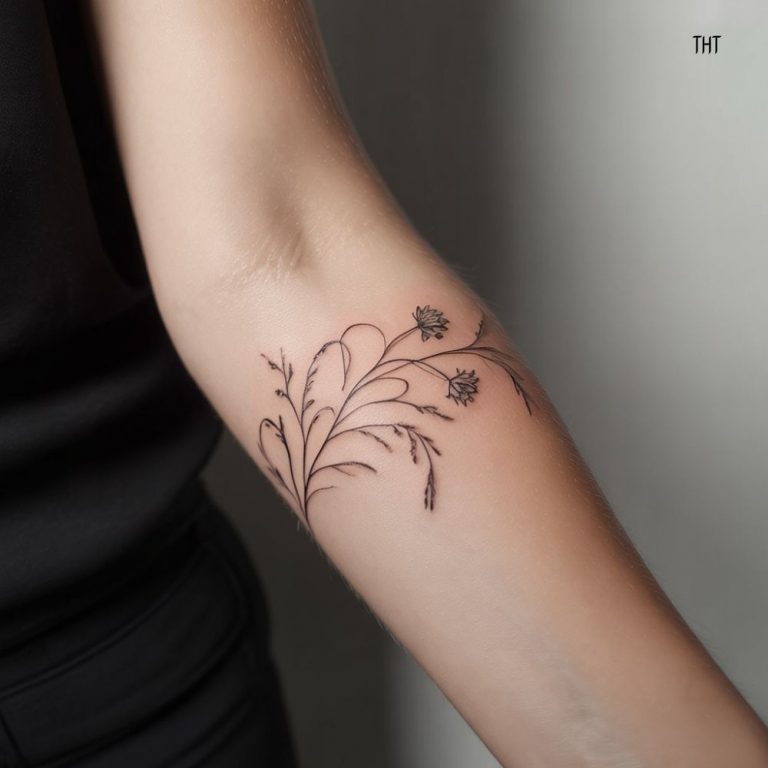
The tattoo in question is a small linework symbol on the inside of my left forearm, placed where it’s visible enough to be noticed but not so prominent that it leads the room. It’s a simple shape that doesn’t announce itself as meaningful unless someone is already looking for meaning.
I acquired it during a period when I craved containment rather than expression, when I wanted something that marked continuity rather than transformation.
There was no dramatic backstory, no event it was commemorating, just a quiet decision made after weeks of thinking about what it would feel like to carry something steady on my body without needing to explain it.
The session itself was calm and unceremonious, no adrenaline spike, no emotional release, just the sensation of the needle, the focus of staying still, and the relief of seeing something familiar take its place on my skin.
How the Misreading Happened
The misreading came from someone who noticed the tattoo while we were talking and paused long enough to make it clear they were about to say something about it. They tilted their head slightly, looked at my arm, and offered an interpretation that was neat, symbolic, and completely off.
They framed it as a statement rather than a question, something along the lines of what it “must” represent, tying it to resilience, growth, or a chapter closed, all the usual language that floats around minimalist tattoos online. It wasn’t intrusive or aggressive, and they weren’t asking for validation.
They were simply confident.
The Split Second of Internal Calculation
In the seconds that followed, I felt myself step back internally, not in discomfort exactly, but in assessment. I could feel the familiar fork in the road, the choice between correcting them and preserving the ease of the interaction, between protecting the private meaning of the tattoo and reclaiming accuracy.
Correcting them would have required context, explanation, and emotional labor that felt disproportionate to the moment, especially since the tattoo wasn’t designed to communicate anything publicly. Letting it stand felt simpler, but it came with its own subtle cost.
I nodded, smiled, and let their interpretation exist unchallenged.

What It Felt Like to Let It Stand
Letting the misreading stand didn’t feel like betrayal or loss, but it did feel like compression, like folding something personal smaller than it wanted to be.
The tattoo remained the same on my skin, but the space around it shifted, as if a layer of meaning had been temporarily replaced with someone else’s narrative.
I didn’t feel misunderstood so much as unseen, which is a quieter, more confusing sensation. The tattoo hadn’t failed to communicate, because it was never meant to communicate in the first place, but the assumption that it should had created a subtle disconnect I couldn’t quite articulate in the moment.
The conversation moved on, but my attention lagged behind.
The Strange Ownership Shift That Happens
What surprised me later was how quickly the tattoo felt less like mine in that moment, not permanently, but briefly, as if the act of someone assigning it a meaning had shifted ownership just enough to be noticeable.
I hadn’t offered the story, but it had been taken anyway, replaced with something more legible, more familiar, and more socially acceptable.
I didn’t feel angry about it. I felt oddly neutral, like watching someone label a box incorrectly and deciding it wasn’t worth stopping them, even though I knew what was actually inside. That neutrality bothered me more than anger would have.
Why I Didn’t Correct Them
I’ve thought a lot about why I didn’t correct them, and it wasn’t about politeness or conflict avoidance, although those were part of it. The deeper reason was that the tattoo’s meaning wasn’t something I wanted to flatten into a soundbite.
Explaining it would have required translating something felt into something sayable, and I wasn’t willing to do that on the spot for someone who hadn’t asked. The misreading wasn’t harmful, but it wasn’t earned either.
Silence, in that moment, felt like a form of boundary.
How This Changed the Way I Talk About My Tattoos
After that interaction, I became more aware of how rarely I volunteer meaning around my tattoos, and how intentional that choice actually is.
I realized that I don’t mind being asked genuine questions, but I resist interpretations offered as conclusions, because they assume a shared language that doesn’t exist.
The experience didn’t make me more defensive. It made me more selective.
The Difference Between Being Asked and Being Told
Being asked about a tattoo creates space. Being told what it means closes it. That difference matters more than I realized before experiencing it directly.
When someone asks, I can choose how much to share, whether to stay surface-level or go deeper. When someone tells, the conversation shifts from exchange to correction, and correction rarely feels generous, even when it’s accurate.
That moment taught me to recognize that discomfort not as sensitivity, but as information.
What This Revealed About Visibility
The misreading also revealed something about visibility I hadn’t fully considered, which is that once something is visible, people feel invited to interpret it, even if interpretation wasn’t part of the original offering.
Tattoos live in that liminal space between private and public, and navigating that boundary is an ongoing process rather than a settled agreement.
I chose the visibility of the tattoo knowing this intellectually, but feeling it emotionally was different.
Conclusion
When someone misreads the meaning of your tattoo, the discomfort doesn’t come from being wronged or misunderstood in a dramatic sense. It comes from the subtle shift in ownership that happens when a private symbol is assigned a public narrative without invitation.
That day taught me that silence can be a form of care, not just for the interaction, but for myself, and that not every meaning needs to be corrected to remain intact. Some things are allowed to stay mine, even when someone else thinks they’ve figured them out.