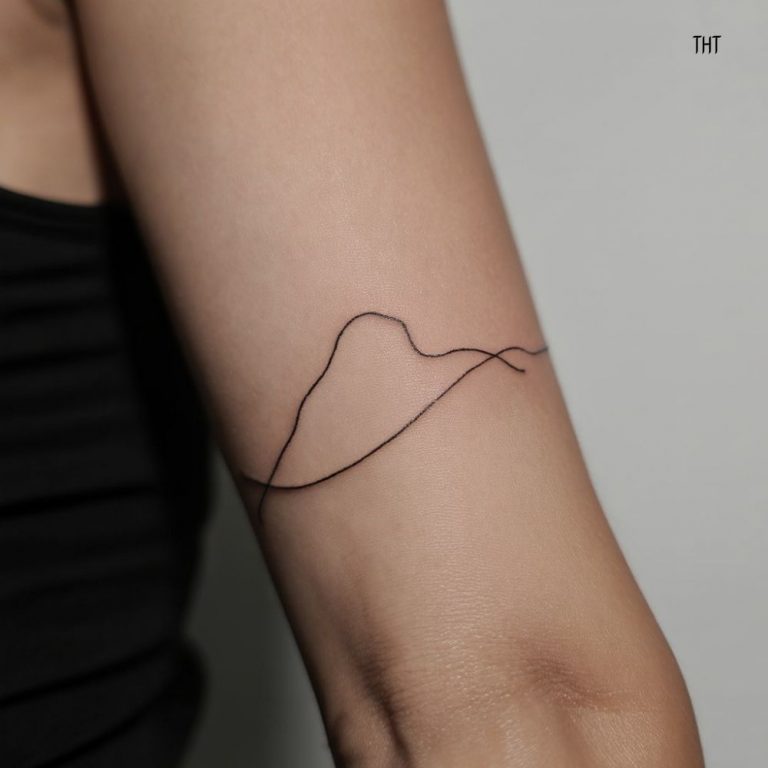
The Morning I Forgot I Had Tattoos Until the Mirror Reminded Me
The morning itself was unremarkable, which is probably why it stayed with me, because nothing about it felt symbolic or emotionally charged until I caught my reflection and realized, with mild surprise, that I had forgotten I had tattoos at all. Not forgotten in the dramatic sense, as if they had disappeared or stopped mattering,…
The morning itself was unremarkable, which is probably why it stayed with me, because nothing about it felt symbolic or emotionally charged until I caught my reflection and realized, with mild surprise, that I had forgotten I had tattoos at all.
Not forgotten in the dramatic sense, as if they had disappeared or stopped mattering, but forgotten in the way you forget about something that has become so integrated into your life that it no longer registers as separate.
That moment in the mirror made me aware of how quietly permanence can dissolve into routine, and how body awareness shifts once something stops being a decision and becomes a condition of everyday life.
It was not a moment of reflection in the inspirational sense, but a small disruption in autopilot, which turned out to say more about how tattoos actually live on a body than any symbolic explanation ever has.
The Kind of Morning Where Nothing Is Announced
It was the kind of morning where everything moved forward without commentary, where my body followed familiar patterns without my mind needing to intervene.
I got dressed without thinking about what I was covering or revealing, moved through the room without checking angles, and operated on habit rather than intention, which is usually how I know something has stopped feeling new.
When I eventually passed the mirror, it was not because I was checking my appearance, but because it was simply there, catching me mid-motion, and that is when the recognition happened.
The tattoos were visible in the reflection, not in a way that startled me, but in a way that reminded me they existed at all, which felt stranger than noticing them intentionally ever would have.
Familiarity as a Kind of Disappearance
There is a point where familiarity does not deepen awareness, but dulls it, and tattoos are especially susceptible to this because they do not change day to day in any obvious way.
Once the initial period of adjustment passes, they stop asking for attention, and your body stops presenting them as new information.
For a long time, I assumed this fading awareness meant the tattoos were becoming less meaningful, or that I was taking them for granted, but that interpretation feels incomplete now.
What actually happens is that the tattoos stop competing with everything else your body is doing, and instead settle into the background where most permanent things eventually end up.

Body Awareness and the Shift From Observation to Occupation
Early in the life of a tattoo, you tend to observe your body more than inhabit it, noticing how the ink sits on your skin, how it looks in different lighting, and how it feels to see something new where there used to be nothing.
Over time, that observational relationship gives way to occupation, where your body feels less like something you are monitoring and more like something you are simply moving through.
That morning, the mirror moment highlighted how fully that shift had happened for me, because the tattoos were not objects of evaluation anymore, but part of the structure I was operating within.
When Permanence Stops Feeling Heavy
One of the things that surprised me most about forgetting my tattoos, even briefly, was how light that forgetting felt. Permanence is often described as something heavy, something you carry consciously, but in practice, permanence becomes light once it stops being questioned.
The tattoos did not feel less permanent because I forgot about them, and they did not feel less important either. Instead, they felt stable enough to be ignored, which is not something we usually associate with meaningful decisions.
The Difference Between Presence and Attention
That moment in the mirror made it clear to me that presence does not require attention, and that something can be fully present in your life without being actively noticed.
The tattoos were there before the mirror and remained there after, unchanged by my awareness of them, which suggests that their role is no longer tied to how often I think about them.
This distinction matters, because it reframes forgetting as a sign of integration rather than neglect. The tattoos are not absent from my life when I am not thinking about them; they are simply no longer asking to be acknowledged in order to remain relevant.
Why This Feels Different From Indifference
There is a temptation to interpret this kind of forgetting as indifference, but that does not feel accurate either. Indifference implies distance or disengagement, while this felt more like trust, as if the relationship no longer needed maintenance in the way it once did.
I did not forget my tattoos because they stopped mattering, but because they stopped needing supervision. They exist without friction, without commentary, and without demand, which is a very different emotional state than disinterest, even if it looks similar from the outside.
Routine has a way of softening symbolism by placing it alongside everything else that makes up a day. A tattoo that once felt like a message eventually becomes a texture, something that contributes to the overall experience of being in your body without insisting on interpretation.
That morning, the tattoos felt less like symbols and more like features, part of the architecture rather than the decoration. This shift does not diminish their meaning; it simply changes the register in which that meaning operates, moving it from conscious thought to embodied experience.
Expectation vs Reality
I once expected tattoos to remain emotionally vivid, always noticeable, and always connected to the reasons I chose them, because that is how permanence is often framed.
The reality has been quieter, less dramatic, and more sustainable, with tattoos becoming part of the rhythm of my life rather than moments I return to for reassurance or reflection.
Forgetting them, even briefly, did not feel like a failure of intention, but like evidence that they had settled into place, which is something I did not know to hope for at the beginning.
Conclusion
Forgetting I had tattoos until the mirror reminded me was not a moment of loss, but a moment of clarity, showing me how thoroughly something permanent can merge with the everyday without disappearing. The tattoos did not fade; my need to notice them did.
That realization made me less concerned with how tattoos are supposed to function symbolically, and more interested in how they actually function once they become part of the background of a life.
In that sense, the mirror did not reveal anything new to me that morning, but it did confirm something important, which is that permanence, when it truly settles, often feels less like weight and more like quiet continuity.