The Snack That Tells Me I’ve Waited Too Long to Eat
There’s a particular moment in the day when my body stops asking politely and starts communicating in a way that’s harder to ignore, even if I still try. It doesn’t announce itself as hunger exactly, and it doesn’t arrive with a growl or an empty feeling, but instead with a subtle shift in how I…
There’s a particular moment in the day when my body stops asking politely and starts communicating in a way that’s harder to ignore, even if I still try.
It doesn’t announce itself as hunger exactly, and it doesn’t arrive with a growl or an empty feeling, but instead with a subtle shift in how I think, how I move, and how patient I am with small inconveniences.
By the time I recognize that shift, I’m usually already past the point where a normal meal feels appealing.
That’s when a very specific snack shows up in my life, not as a craving, but as a signal, one that tells me I’ve waited too long to eat and that whatever I do next needs to be simple, grounding, and fast enough to catch me before I slide further into irritation.
How I Know I’ve Missed the Window
The first sign isn’t physical in the obvious sense, but cognitive, a slight fuzziness that makes choosing feel disproportionately hard. I open the fridge, stare at it longer than necessary, and feel mildly annoyed by the presence of options, even though nothing in particular looks wrong.
My hands feel a little unsteady, my thoughts start skipping ahead, and I notice myself rushing through small tasks without finishing them properly, which is usually my body’s way of telling me it’s running on fumes.
At that point, the idea of cooking feels unrealistic, and the idea of skipping food entirely feels dangerous in a way I’ve learned to respect. That’s when I stop negotiating and make the snack I know will land.
The Snack That Always Shows Up
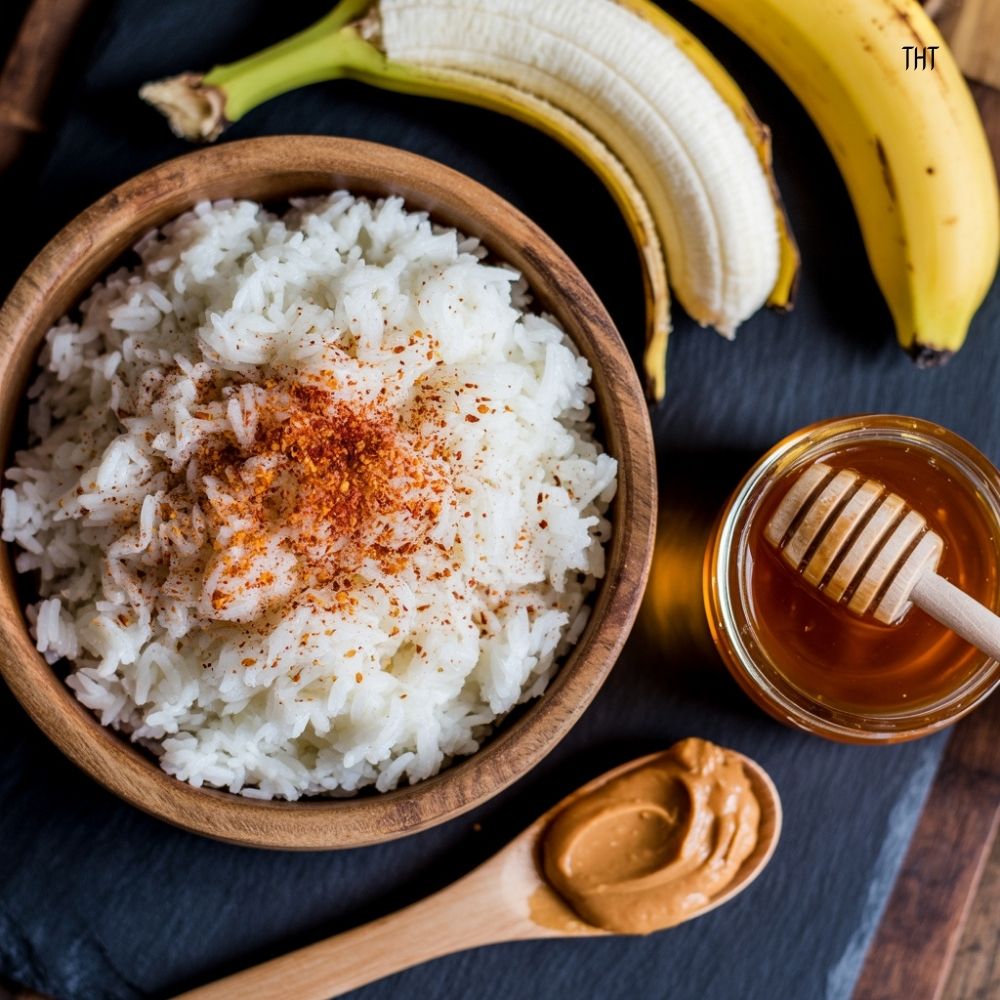
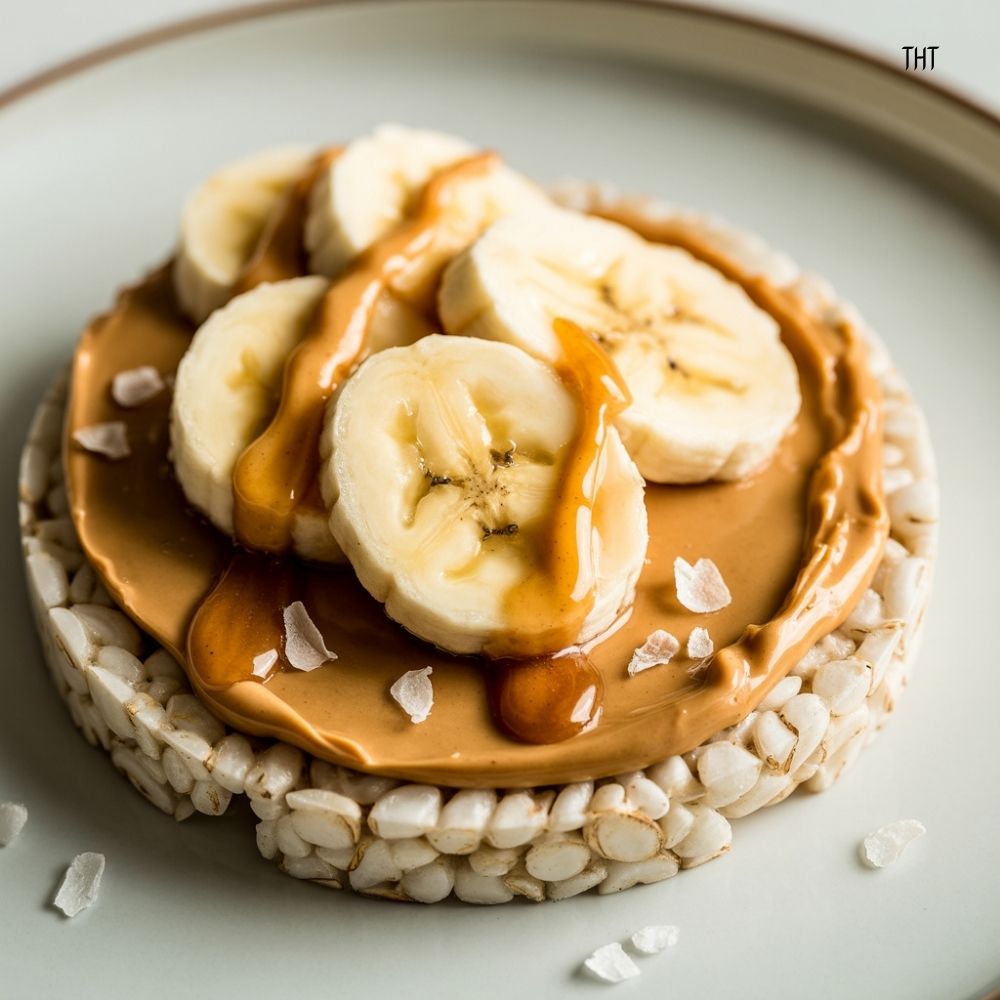
The snack that tells me I’ve waited too long to eat is a rice cake with peanut butter, sliced banana, and chili honey, finished with a pinch of flaky salt.
It’s not something I eat casually or reach for when I’m browsing, because it only really makes sense when I need it, and when I do, it works every time.
What I like about it is that it hits multiple needs at once without feeling heavy or chaotic, offering sweetness, fat, salt, and a little heat in a format that doesn’t require chewing forever or thinking through proportions.
It’s substantial enough to stop the spiral, but light enough that I don’t regret eating it too late in the day. Most importantly, it doesn’t ask me to decide anything once I start.
Why This Snack Works When Others Don’t
There are lots of snacks in my kitchen that look more impressive or nutritionally balanced on paper, but most of them fail me in this exact moment because they require engagement. I don’t want crunch that’s too loud, flavors that are too sharp, or textures that ask me to slow down.
This snack works because it’s immediately legible to my body, soft enough to eat without effort, sweet enough to register quickly, and grounded enough that I feel my energy stabilize within minutes.
The rice cake gives structure without density, the peanut butter anchors everything, and the banana softens the edges.
The chili honey is the part that surprises people, but it’s what makes the whole thing feel intentional rather than desperate.
How I Make It Without Thinking
I don’t measure anything when I make this, and I don’t treat it like a recipe in the moment, but if I slow it down, this is what it looks like.
I grab one plain rice cake, not flavored, because I want the base neutral, and spread a generous layer of peanut butter over it, making sure to go all the way to the edges so there’s no dry bite waiting at the end.
The peanut butter needs to be smooth and slightly salty, nothing fancy, something that spreads easily without tearing the rice cake.
I slice half a banana directly over the top, letting the pieces fall where they want, not worrying about symmetry, and then drizzle chili honey lightly across the surface, just enough to add warmth without turning it into dessert.
A pinch of flaky salt finishes it, not because it needs more salt, but because that contrast wakes everything up.
I eat it standing at the counter more often than not, which feels appropriate for how quickly it works.
The Recipe When I Actually Write It Down
Rice Cake with Peanut Butter, Banana, and Chili Honey
Ingredients
- 1 plain rice cake
- 1–2 tablespoons smooth peanut butter
- ½ ripe banana, sliced
- 1 teaspoon chili honey (or honey with a pinch of chili flakes)
- A small pinch of flaky salt
How I Put It Together
Spread the peanut butter evenly over the rice cake, making sure the surface is fully covered. Layer the banana slices on top without pressing them down, drizzle lightly with chili honey, and finish with a pinch of flaky salt. Eat immediately, before you have time to overthink it.
What This Snack Reveals About My Timing
This snack has taught me more about my timing than my appetite ever did, because it only shows up when I’ve ignored earlier signals. I don’t crave it when I’m well-fed or balanced, and I never reach for it when I’m bored.
It appears when I’ve pushed past hunger in favor of momentum, telling myself I’ll eat later, and later turns into too late. The snack doesn’t judge that choice. It just responds to it.
In that way, it’s less a treat and more a checkpoint.
Why I Don’t Try to Replace It
I’ve tried to replace this snack with things that seem more “appropriate,” like yogurt bowls or protein bars, but those options either feel like too much work or not enough grounding when I’m in this state. This one works because it’s fast, forgiving, and doesn’t require chewing through resistance.
I don’t rotate it out for variety, because variety isn’t the point here. The point is recognition, the moment I realize what’s happening and respond before things slide further.
Expectation vs Reality
I used to expect hunger to show up clearly and politely, something I could schedule around, but the reality is messier and quieter. My body signals need through impatience, distraction, and low-grade irritation long before it signals emptiness.
This snack taught me to listen sooner, not by being virtuous, but by being effective.
Conclusion
The snack that tells me I’ve waited too long to eat isn’t flashy or complicated, and it doesn’t pretend to be a solution to anything beyond the moment it addresses. It shows up when I need interruption more than nourishment, grounding more than fullness.
By the time I’m making it, the message has already been delivered, and the snack simply helps me listen before the day unravels further, which is all I really need it to do.