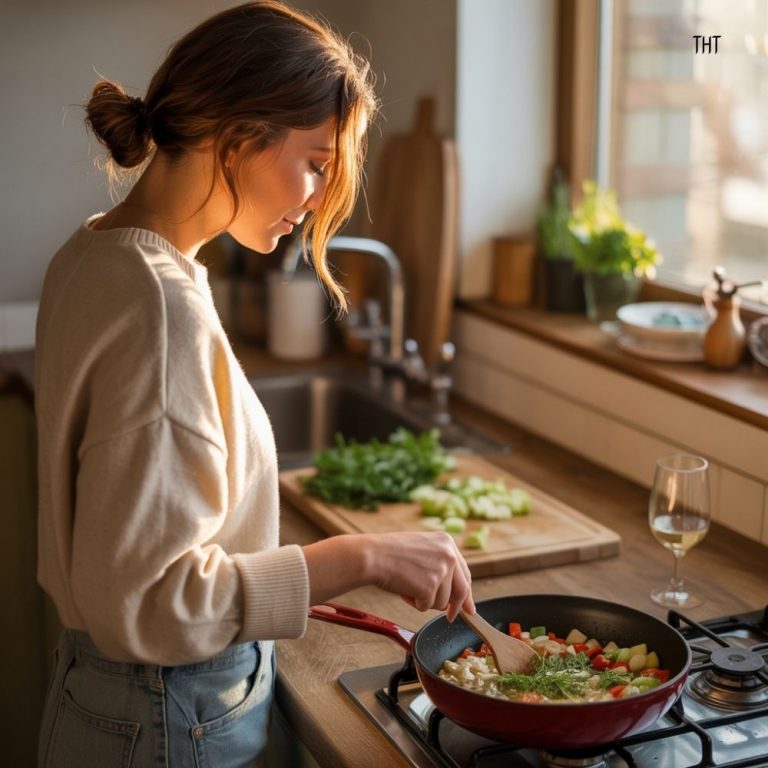
What I Eat When I Don’t Want to Think About Food
There are days when food feels like a decision I don’t have the capacity to make because the act of thinking about it feels like one task too many layered onto a day that has already taken its share. On those days, hunger shows up quietly rather than urgently. What I want most is something…
There are days when food feels like a decision I don’t have the capacity to make because the act of thinking about it feels like one task too many layered onto a day that has already taken its share.
On those days, hunger shows up quietly rather than urgently. What I want most is something that doesn’t require evaluation, customization, or even a clear opinion.
It took me a long time to understand this wasn’t a motivation problem or a failure of creativity, because I spent years assuming that if food felt heavy, it meant I was doing something wrong.
Eventually, repetition made the pattern clear, and I realized that what I was really craving wasn’t novelty or indulgence, but relief from decision-making, something steady enough that my brain could step aside without consequence.
The Evenings When This Shows Up
This usually happens in the early evening, after the day has already taken its toll on me, when I’m not exhausted in a dramatic way but mentally exhausted, slightly overstimulated, and uninterested in solving even small problems.
I open the fridge, stand there longer than necessary, and notice the familiar feeling of nothing pulling me forward, not resistance exactly, but a lack of momentum.
Those are the nights when inspiration feels intrusive rather than helpful, and the idea of inventing a meal feels disproportionate to the energy I have left. I don’t want to optimize nutrients, balance flavors, or clean as I go.
On those nights, I want food that knows what it’s doing without asking me to participate. That’s when I make congee.
Why Congee Became My Default
Congee entered my life quietly, not through intention or curiosity, but through repetition during a period when my appetite was inconsistent and my energy unpredictable.
I needed something that could adapt without comment. I wasn’t looking for comfort food in the traditional sense, and I wasn’t trying to connect to anything nostalgic or meaningful..
A pot of rice, too much water, gentle heat, and time, all moving at a pace that didn’t require supervision. No moment where precision mattered, no point where I had to decide whether it was turning out correctly, because it always did in its own way.
At first, I appreciated it for its ease, but over time, I realized what I was really responding to was the lack of friction, the way the process didn’t demand attention or judgment, and the way the food seemed content to soften on its own schedule.
How I Make It Without Thinking
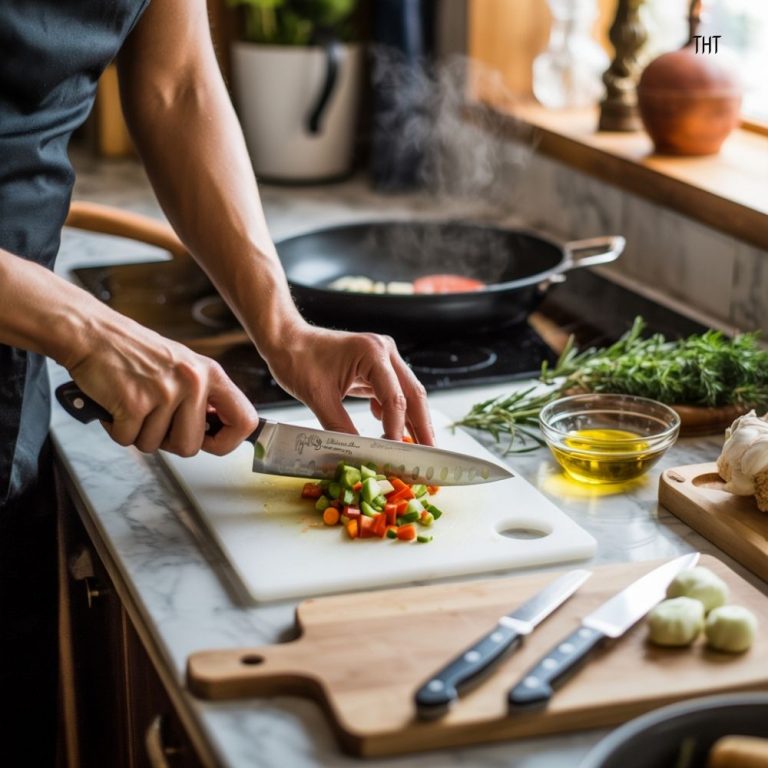
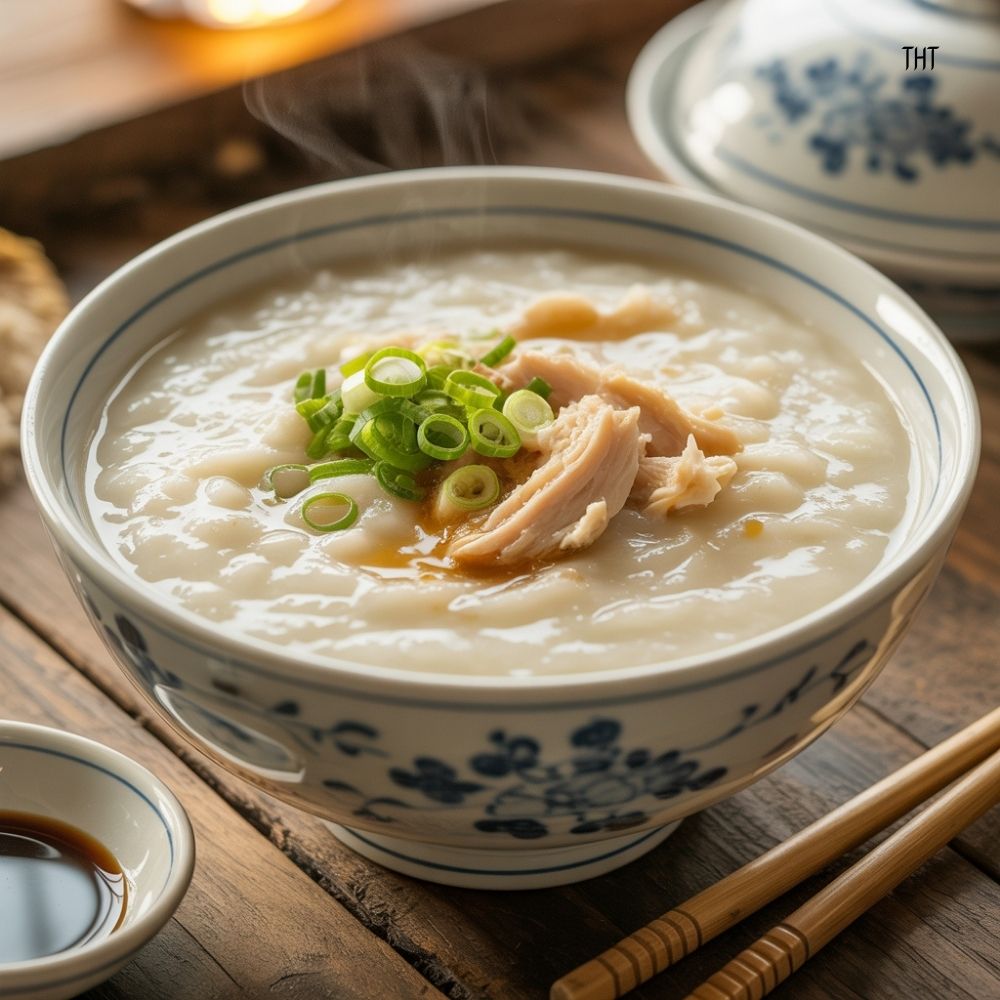
By now, I make congee almost entirely from muscle memory, which is part of why it works so well on the days I need it. I rinse the rice out of habit rather than ritual, using short-grain if I have it and jasmine if I don’t, without worrying about whether one is technically better than the other.
I don’t measure carefully anymore, adding water until it looks like too much, then adding a little more just in case, because excess is easier to forgive than scarcity. The pot goes on the stove, the heat stays low, and I walk away without setting a timer or announcing any intention.
I stir when I remember, sometimes frequently, sometimes not at all, and I’ve stopped caring whether it cooks faster or slower than expected. By the time it’s ready, the rice has lost its shape and turned into something soft and forgiving, and that texture matters more to me than flavor on nights like this.
What I Put On Top, If Anything
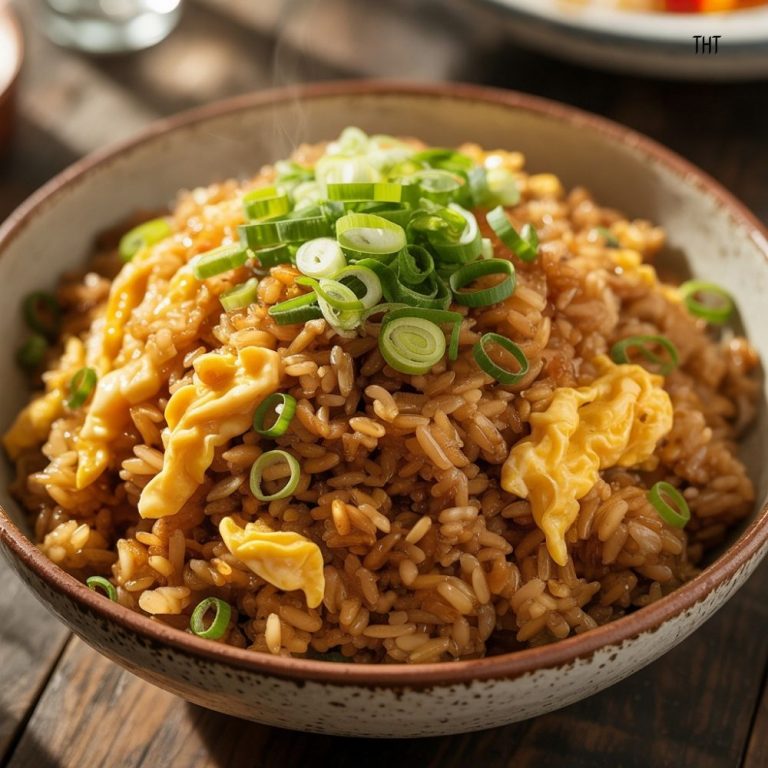
Some nights I add a soft-boiled egg, sliced in half and dropped gently into the bowl so the yolk blends into the rice without needing encouragement. Other nights it’s just a splash of soy sauce, a little sesame oil, and scallions if I have the energy to cut them.
If there’s leftover chicken or tofu in the fridge, it goes in, and if there isn’t, nothing feels missing, which might be the most important part. I don’t build layers or try to balance textures, and I don’t stand there wondering whether the bowl needs more.
The food doesn’t need to be impressive or complete, it just needs to be warm and steady.
The Difference Between This and “Comfort Food”
For a long time, I thought comfort food had to be indulgent, rich, or emotionally charged, something tied to memory or reward, but congee doesn’t work that way for me.
It isn’t exciting, nostalgic, or particularly expressive, and it doesn’t create an emotional spike that fades into regret afterward.
Instead, it feels neutral in a deeply reassuring way, providing just enough stimulation to feel cared for without tipping into excess. There’s no crash, no second-guessing, and no sense that I’ve overdone it or missed out on something better.
That neutrality turns out to be the comfort.
What This Meal Does for My Brain
When I eat congee, my brain stops scanning for improvement, because there’s nothing to adjust or enhance without defeating the point. I don’t think about whether I should have eaten something else, and I don’t wonder if this choice says anything about me or my habits.
I eat, I feel my body respond, and then I stop thinking about food entirely, which is rarer than it should be. That silence feels like relief rather than emptiness, the absence of internal commentary I didn’t realize I was carrying.
How This Changed My Relationship With Eating Alone
Congee quietly changed how I think about eating alone, because it removed the need for distraction or justification.
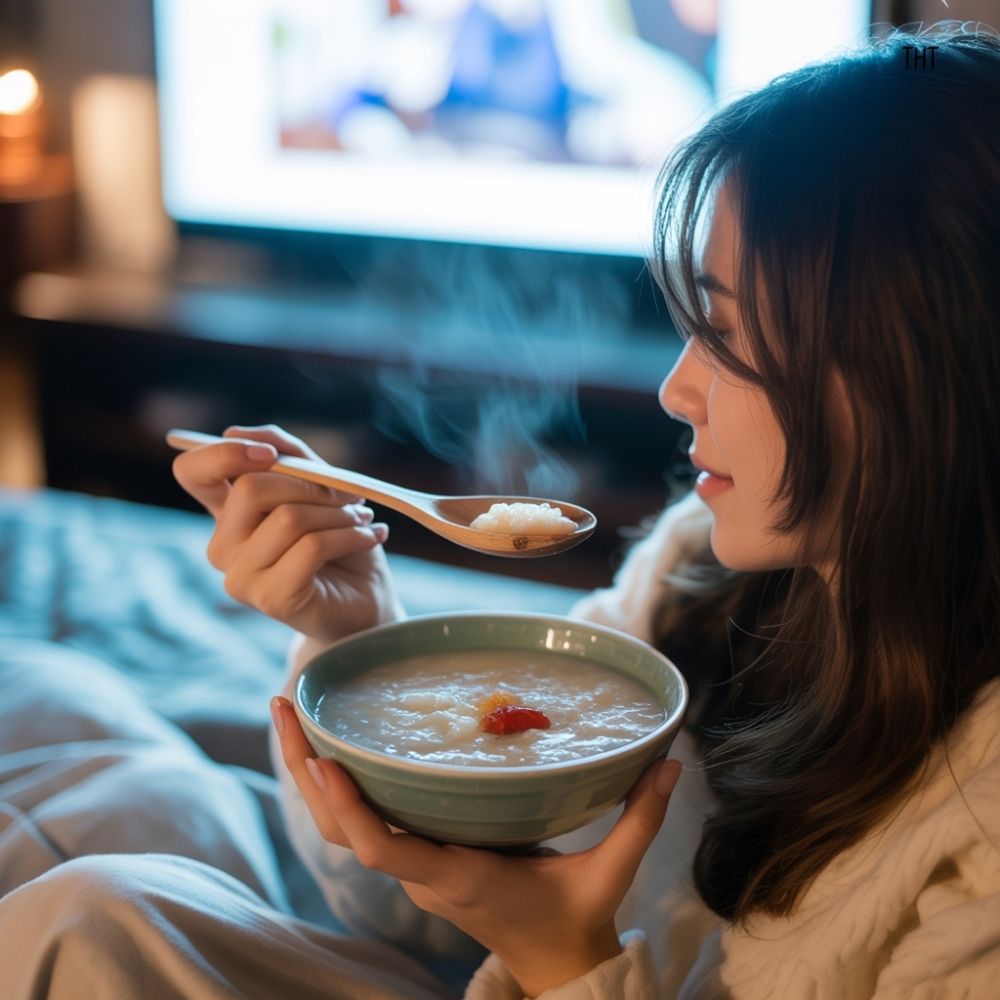
I often eat it sitting on the floor with the bowl in my hands, steam fogging my glasses slightly, without music, without a show, and without the sense that I should be doing something else at the same time.
The simplicity feels intentional without being performative, and I don’t feel the need to make the meal feel like an event in order for it to count. It’s enough on its own.
What This Says About Care
I used to think care had to be visible and narratable in order to matter, something you could point to and explain, but this meal challenged that idea more effectively than anything else I’ve tried.
Making congee isn’t an act of self-care in the aspirational sense, and it doesn’t come with language that makes it feel special.
It’s maintenance, plain and effective, choosing the option that keeps things running smoothly without asking for recognition. That kind of care doesn’t announce itself, and it doesn’t need to. It works anyway.
The Days I Crave It Most
I crave congee most on days when I’ve been making decisions nonstop, when my attention has been pulled in too many directions, and when the idea of choosing feels heavier than the idea of cooking.
It shows up after long conversations, crowded rooms, and emotionally neutral but mentally demanding days.
The days that don’t feel dramatic enough to justify collapse, but still leave me empty, are the ones this meal understands best.
Conclusion
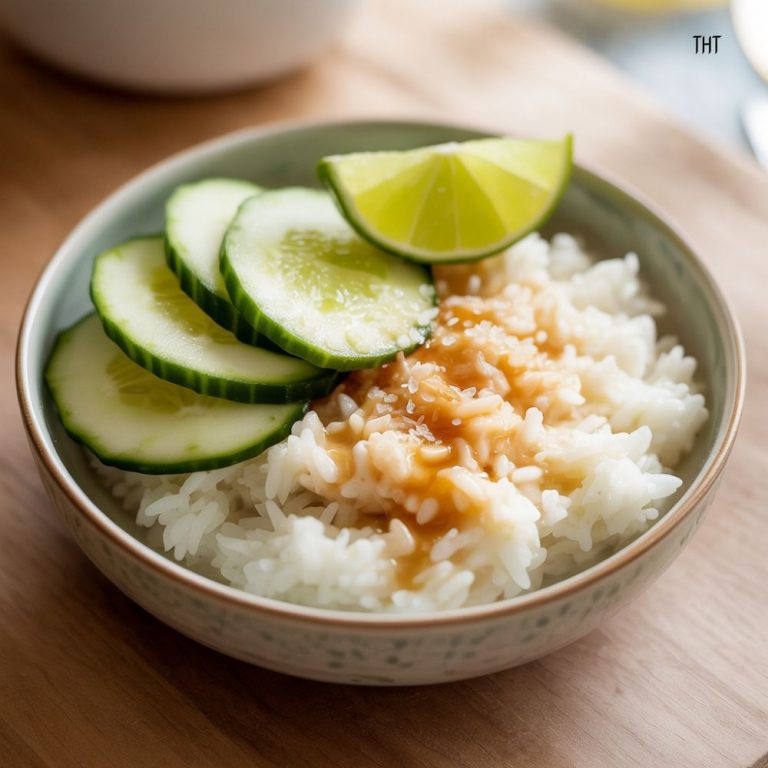
What I eat when I don’t want to think about food isn’t dramatic or expressive, and it doesn’t need to be. It’s a bowl of rice that’s been allowed to soften completely, topped with whatever I have the capacity to add, and eaten without commentary.
That bowl doesn’t fix my day or change my mood in any obvious way, but it removes one decision from the pile and lets my body do the rest. Some nights, that kind of quiet support is more than enough.