What This Tattoo Meant When I Needed Control, and What It Means Now That I Don’t
When I got this tattoo, I would have said it was about strength, or grounding, or stability, depending on who was asking and how much explanation felt appropriate in the moment. What I would not have said was that the tattoo was about control, not in an obvious or dramatic way, but in the quieter…
When I got this tattoo, I would have said it was about strength, or grounding, or stability, depending on who was asking and how much explanation felt appropriate in the moment.
What I would not have said was that the tattoo was about control, not in an obvious or dramatic way, but in the quieter sense of wanting something in my life to feel contained, decided, and unchangeable when everything else felt negotiable or uncertain.
Looking at it now, years later, I can see that clearly, not because the tattoo itself has changed, but because I have, and the contrast between who I was then and how I live now has made the original motivation easier to name.
The tattoo still exists on my body, but it no longer serves the same function, which has changed its meaning in a way I did not anticipate and could not have planned for.
The Tattoo and the Moment I Chose It
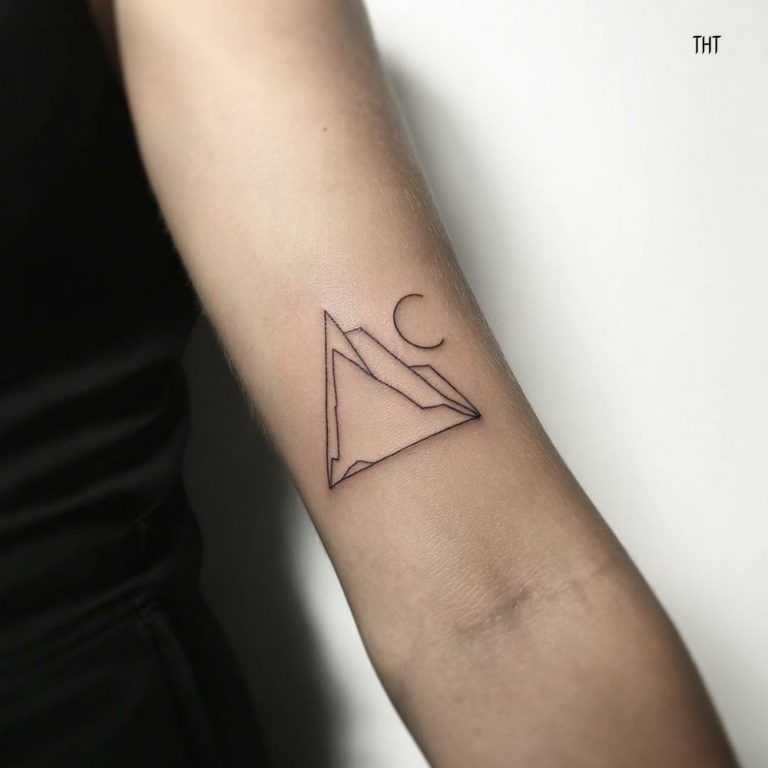
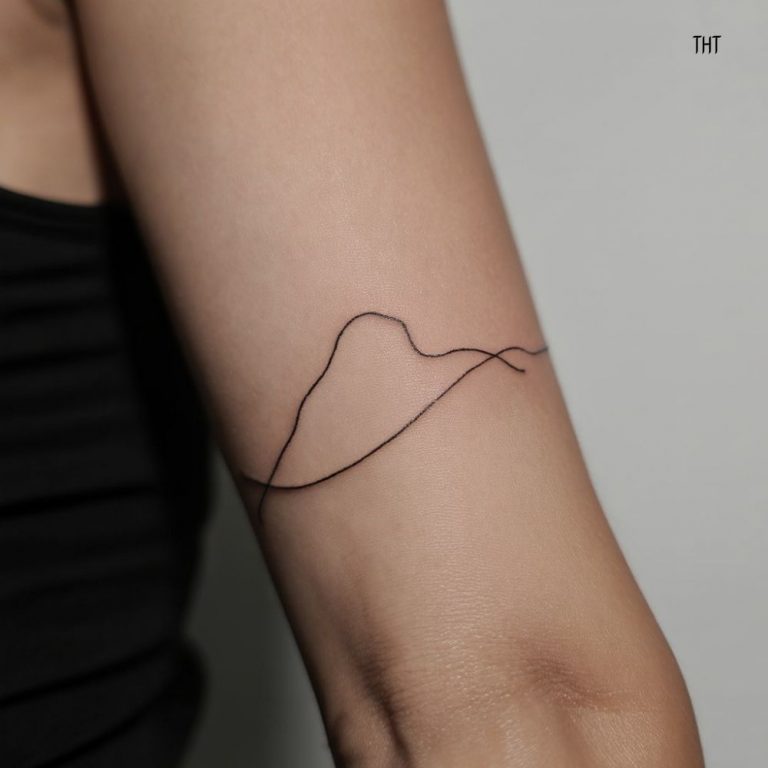
The tattoo sits on my ribcage, slightly off-center, placed there deliberately because it felt private without being hidden, something I could access easily without it being constantly visible to the world.
It is a simple geometric form made of clean, intentional lines, symmetrical enough to feel orderly, but not so perfect that it looks mechanical, which mattered to me more than I realized at the time.
I got it during a period when my life looked stable from the outside but felt loosely held together on the inside, when I was managing uncertainty by organizing, planning, and refining everything I could reach.
The appointment itself was efficient and quiet, and I remember feeling relieved rather than excited when the stencil went on, as if seeing the design on my body confirmed that at least one decision was finished and no longer up for revision.
That relief stayed with me longer than the adrenaline did, which should have been a clue.

What Control Looked Like Then
At that point in my life, control did not look like dominance or rigidity, but like carefulness, preparation, and the avoidance of surprise. I wanted things to make sense, to follow predictable patterns, and to feel internally consistent, even when external circumstances were anything but.
The tattoo fit neatly into that mindset because it was contained, deliberate, and resistant to reinterpretation, at least in theory. It felt like something I could rely on, a visual anchor that would not shift or ask questions once it was in place.
I was not trying to freeze myself in time, but I was trying to reduce variables, and the permanence of the tattoo offered a sense of certainty that felt comforting rather than restrictive at the time.
How the Tattoo Functioned as Control
What I did not understand then was that the tattoo was doing emotional work for me, not just aesthetic work. It was holding a sense of order when my internal landscape felt unstable, giving me something fixed to return to when other aspects of my life felt provisional.
In that phase, I looked at the tattoo often, not because I loved it more then than I do now, but because it reassured me. It reminded me that I could make decisions and live with them, that I could choose something permanent and not immediately regret it, which mattered more to me than the design itself.
The tattoo was not solving anything, but it was containing something, and at the time, containment felt like progress.
The Shift Away From Needing Control
The shift did not happen all at once, and it did not arrive with any clear milestone that I could point to as the turning point. Over time, my relationship with uncertainty softened, not because life became easier, but because I became less invested in managing every possible outcome.
As that happened, the role the tattoo played in my life began to change as well, though I did not notice it immediately. I stopped checking in with it for reassurance, stopped needing it to confirm anything about my decision-making abilities, and eventually stopped thinking about it at all for long stretches of time.
This absence of attention was not rejection, but redundancy, because the tattoo was no longer doing work I needed done.
What the Tattoo Means Now
Now, when I notice the tattoo, it does not feel like a stabilizing force or a symbol of strength, but more like a record of how I once coped. It represents a version of myself who needed things to be orderly in order to feel safe, and who used permanence as a way to quiet uncertainty.
That does not make the tattoo obsolete or embarrassing, but it does make it specific to a moment I no longer inhabit. The meaning has shifted from active reassurance to passive recognition, which feels appropriate given how my relationship with control has evolved.
The tattoo no longer anchors me, because I do not feel adrift in the same way, and that change feels like progress rather than loss.
Why This Change Does Not Feel Like Regret
It would be easy to interpret this shift as regret, especially if you believe that tattoos should retain a consistent emotional meaning over time in order to remain valid. For me, the opposite has been true, because the tattoo still makes sense once I allow it to belong fully to the person who chose it.
I do not wish I had chosen something else, and I do not feel disconnected from it, even though I would not get the same tattoo now for the same reasons. The tattoo did its job when it needed to, and now it rests, which feels like a reasonable outcome rather than a disappointing one.
What This Taught Me About Control and Permanence
Living with this tattoo has taught me that permanence does not guarantee stability, and that control achieved through fixed symbols is often temporary by nature.
What lasts longer is the capacity to tolerate uncertainty, which no tattoo can provide, but which tattoos sometimes help us develop indirectly.
The tattoo marked a phase where control felt necessary for survival, and its continued presence now reminds me that I moved through that phase without becoming stuck in it. That feels more meaningful to me than any symbolic explanation I could have attached to the design at the beginning.
Conclusion
This tattoo meant control when I needed it, and now it means context, which feels like a fair exchange. It reminds me not of who I am, but of how I learned to become more flexible, more tolerant of uncertainty, and less reliant on fixed markers to feel grounded.
In that way, the tattoo did not lose meaning when I stopped needing control; it simply stopped working overtime, which feels less like fading significance and more like a quiet sign that the work it was doing is no longer required.